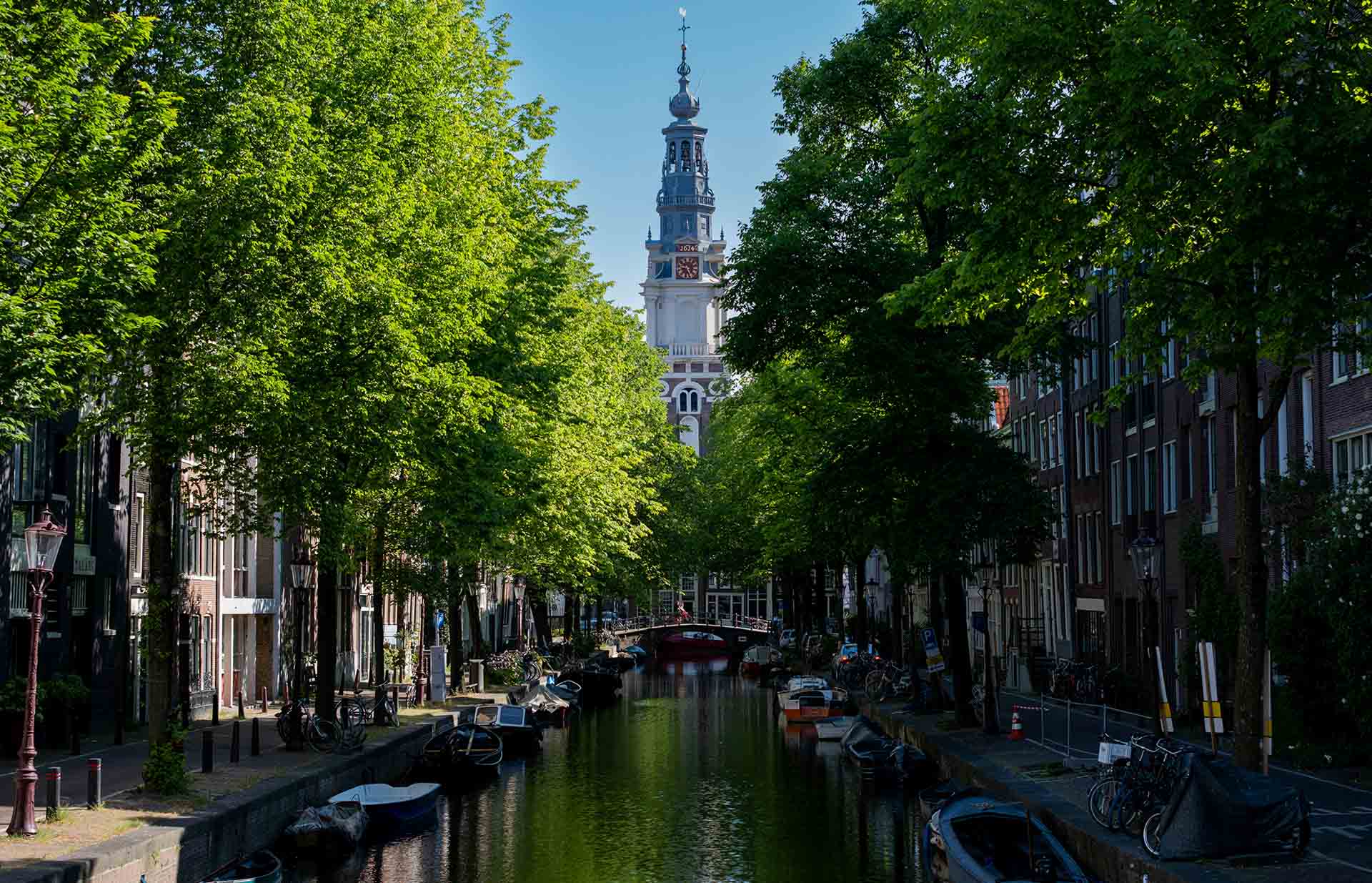
15 surprising facts about the Amsterdam canals you probably never knew
15 surprising facts about the Amsterdam canals that will change the way you see the city, from sunken bicycles to almost demolished waterways.
Amsterdam is famous for its canals. But most visitors walk past them, photograph them and move on without knowing what is actually underneath, behind and beneath those calm brown waters. Here are 15 facts that change how you see them.
1. Amsterdam has more canals than Venice
Venice gets the reputation, but Amsterdam has the numbers. The city has over 100 kilometres of navigable canals, compared to around 38 kilometres in Venice. Amsterdam also has more bridges: over 1,500, compared to Venice's 400 or so. The difference is that Amsterdam does not market itself as a canal city the way Venice does, so most visitors are genuinely surprised by the scale of it.
2. The canal ring was dug entirely by hand
The Grachtengordel, Amsterdam's famous semicircular canal belt, was constructed in the 17th century without any machinery. Thousands of workers dug the Herengracht, Keizersgracht and Prinsengracht using shovels, wheelbarrows and horse-drawn carts. The entire system was completed in under a century, which for the time was a remarkable feat of urban engineering.
3. It is a UNESCO World Heritage Site since 2010
The canal ring was added to the UNESCO World Heritage list in 2010, recognised as one of the finest examples of planned urban expansion in history. The canals were not just beautiful: they were a working infrastructure system designed to drain the swampy land, move goods, and create building plots. The fact that the 17th-century street plan is still largely intact is what makes it exceptional. Want to see it from the water? Browse canal tours on OnTheCanals.
4. The houses are deliberately tilted forward
If you look closely at the canal houses, many of them lean slightly toward the water. This is not subsidence. It is intentional. Amsterdam merchants built their houses with a forward tilt so that goods could be hoisted up to the top floors using a beam and pulley system without scraping the facade. Those beams, called hijsbalken, are still visible on most old canal houses today.
5. Around 1,500 houseboats are permanently moored in Amsterdam
Roughly 2,500 people live on the water in Amsterdam, on around 1,500 registered houseboats. Most are moored along the quieter canals in the Jordaan and Amsterdam Oost. Houseboat residents pay a mooring fee to the city, and the boats are subject to the same planning rules as regular houses. Waiting lists for a houseboat permit are notoriously long.
6. The water is cleaner than you think
The Amsterdam canals were notoriously polluted for much of the 20th century. Since the 1990s, the city has invested heavily in water quality. Today the canals are home to over 20 species of fish, including pike, perch and bream. Swimming is officially discouraged but not always prohibited, and an annual swim event, the Amsterdam City Swim, takes place in the canals every September.
7. The canal ring was almost demolished in the 1960s
In the 1960s, Amsterdam city planners seriously considered filling in large sections of the canal ring to build motorways. The plan was to accommodate the growing number of cars in the city. Public resistance and heritage campaigners eventually stopped it, and the canals were preserved. Had the plan gone ahead, the UNESCO designation would obviously never have happened.
8. Each canal has its own personality
The three main canals of the ring were designed for different social classes. The Herengracht, or Gentleman's Canal, was the most prestigious and was home to the wealthiest merchants. The Keizersgracht, or Emperor's Canal, was slightly less exclusive but still highly desirable. The Prinsengracht, or Prince's Canal, was more commercial and working class, lined with warehouses rather than mansions. That hierarchy is still partly visible in the architecture today.
9. There are around 2,500 sunken bicycles in the canals
Every year, the city dredges the canals and pulls out approximately 12,000 to 15,000 bicycles. The total number of submerged bikes at any given time is estimated at around 2,500. Some fall in by accident, many are thrown in deliberately, and some are victims of theft followed by disposal. The municipality spends several million euros per year on canal dredging.
10. The IJ is not a canal
Locals often distinguish between the canals and the IJ. The IJ, which runs along the northern edge of the city centre behind Centraal Station, is not a canal but a former inland sea. It connects Amsterdam to the North Sea via the North Sea Canal, which was dug in 1876. The IJ is considerably wider and more exposed than the inner canals, and it carries serious shipping traffic including freighters and cruise ships.
11. You can rent a boat with no experience and no licence
Electric sloeps up to a certain size can be operated in Amsterdam without a boat licence. Most rental companies offer boats for up to 8 people, provide a short briefing, and let you loose on the canals. This makes Amsterdam one of the few major cities in Europe where you can self-captain a boat through a UNESCO heritage site on a Tuesday afternoon with no prior experience. Browse all self-guided boat hire options on OnTheCanals.
12. The canal ring is not symmetrical
The Grachtengordel looks like a perfect semicircle on a map, but it was built in two phases. The western section was completed first, in the early 1600s. The eastern section was added later and is slightly different in layout. The original plan called for a full circle, but it was never completed, which is why the eastern side of the canal ring feels slightly different in character from the western Jordaan side.
13. The narrowest house in Amsterdam is on the Singel
The Singel 7, often cited as the narrowest house in Amsterdam, measures just over 2 metres wide at the front. It was originally a servants' entrance to a larger building behind it. There is debate about whether it technically counts as a full house, but it is officially registered and has been inhabited. You can sail past it on any canal tour that covers the Singel.
14. Over 165 canals exist in the city
The number commonly cited is 165 canals. Not all of them are navigable by tourist boats: some are too shallow, too narrow, or gated. The inner ring canals are the most famous, but Amsterdam also has extensive water systems in the eastern harbour area and in the newer districts that were built on reclaimed land in the 20th century.
15. The best way to understand Amsterdam is from the water
This is less a fact than a well-tested observation. The canal houses were designed to be seen from the water: the facades are at their best when viewed head-on from a boat. The scale of the city, the density of the architecture, and the way the light hits the water in the late afternoon are things you simply cannot experience from a bicycle or on foot. Almost every frequent visitor to Amsterdam will say the same thing: get on the water at least once.
Browse all boat hire, canal tours, watersport and private cruises on OnTheCanals and find the right option for your group, budget and schedule.